
Throughout Scripture, God repeatedly diagnoses the health of persons, institutions, and nations through the quality of their judgments.
The prophets rarely confine themselves to cataloguing sinful acts. Instead, they expose failures of discernment, distinction, counsel, evaluation, justice, and governance. Priests cease to distinguish between the holy and the profane. Judges accept bribes. Rulers justify the wicked. Shepherds govern themselves rather than the flock. Truth disappears from public determination. Good is called evil, and evil good.
This recurring emphasis is striking.
If Scripture were concerned only with the fact that moral agents had failed, the broader language of wrongdoing would appear sufficient. Yet the biblical diagnosis repeatedly becomes more specific. Its concern is directed toward the processes by which moral reality is apprehended before it is enacted, suggesting that Scripture is interested not merely in what people decide, but in the kind of decision-makers they have progressively become.
This observation forms the starting point of the present inquiry. The essay proposes that Scripture repeatedly returns to judgment because judgment is not merely the rendering of decisions. It is one of the principal means through which God forms, evaluates, and entrusts the adjudicative capability required for faithful participation in His moral government.
The present proposal is therefore abductive rather than merely descriptive. It does not claim that Scripture explicitly employs the terminology developed in this essay. Rather, it asks what conceptual framework most parsimoniously explains the persistent canonical prominence accorded to judgment, counsel, wisdom, discernment, distinction, and the formation of governors across otherwise diverse historical, prophetic, wisdom, and apostolic contexts. The framework is offered as an explanatory model whose value lies in its ability to unify these recurring canonical patterns rather than in the isolated exegesis of any single passage.
Why does Scripture repeatedly return to judgment, discernment, distinction, and decision-making when diagnosing the corruption or restoration of persons, institutions, and societies?
Why are failures of judgment so consistently presented as antecedent to failures of governance?
Why does restoration so often begin with the restoration of judges, wise counsel, faithful distinction, and righteous determination?
If moral failure alone were Scripture's principal concern, it could simply condemn iniquity, transgression, and sin. Instead, it repeatedly examines the manner in which reality is apprehended, distinctions are preserved or collapsed, values are ordered, obligations are recognised, and determinations are reached.
Does Scripture therefore present judgment as the principal architectonic means through which God progressively forms the adjudicative capability of moral personalities, preparing them to participate faithfully—or unfaithfully—in the administration of His antecedent moral order within every sphere of delegated governance?
The thesis advanced in this essay is straightforward, although its implications are extensive. God's primary concern is not merely that His servants render righteous judgments, but that they become the kind of governors constitutionally capable of faithfully administering His antecedent moral order. Scripture's repeated concern with judgment is therefore not simply a concern with correct decisions. It is a concern with the progressive formation of those moral personalities through whom His moral government becomes historically embodied.
It is precisely for this reason that Scripture repeatedly foregrounds judgment. Judgment is the truth-directed architecture through which factual and moral reality is brought to determination. More fundamentally, however, every exercise of judgment performs two inseparable formative works. It determines what shall become historically real, while simultaneously contributing to the progressive constitutional formation of the moral personality through whom future judgments will themselves be rendered. Human beings therefore do not merely render judgments; through repeated participation in God's antecedent moral order they progressively become certain kinds of judges—and, ultimately, certain kinds of governors.
Judgment is therefore not merely the rendering of verdicts. It is one of the principal means by which God forms the adjudicative capability required for faithful participation in His delegated moral government.
The judgment architecture is plastic. Through repeated exercises of judgment, prerogative, correction, discipline, reflection, and habituation, it may become progressively strengthened, degraded, recalibrated, or restored. Its development is therefore fundamentally diachronic. The central concern of the present inquiry is not merely whether particular judgments are correct, but whether the constitutional capability from which they arise is progressively acquiring—or progressively losing—the capacity faithfully to administer God's antecedent moral order.
Several clarifications should be made at the outset.
First, this essay does not propose that judgment creates moral reality. Moral reality remains antecedent to every human act of judgment. The good is neither constructed through autonomous human preference nor established by social consensus or institutional authority. Rather, judgment concerns the faithful apprehension, evaluation, and administration of a moral order already grounded in God's own constitution.
Second, neither does this inquiry revise the established moral taxonomy developed elsewhere within the SubMetaphysics project. The distinctions between iniquity, transgression, and sin remain controlling. Iniquity concerns axiological distortion; transgression concerns knowing deontic rebellion; sin concerns modal-praxeological failure in execution. The present essay addresses a different question. Rather than asking what these forms of moral failure are, it asks how they progressively become operative through the architecture of judgment, and how that architecture itself becomes progressively more—or less—constitutionally capable of faithfully administering God's antecedent moral order.
Third, the investigation extends beyond political government. Governance is understood in its broadest sense as the responsible ordering of moral agency wherever determinations concerning what ought to become historically real must be made. The same architectonic relations therefore recur, with appropriate contextual variation, in the governance of the indivisible moral personality, the family, the church, the corporation, the military, and the nation. The offices differ. The responsibilities differ. The scale differs. Yet the underlying constitutional architecture by which moral governors are formed remains recognisably the same.
Finally, this proposal is offered as an inquiry rather than as a completed dogmatic system. Its purpose is to determine whether Scripture consistently presents judgment as one of the principal means by which God forms the constitutional capability of those entrusted with delegated governance, enabling them either faithfully—or unfaithfully—to administer His antecedent moral order within history.
If that pattern proves consistent, then judgment is not merely another biblical topic, nor merely the rendering of judicial verdicts. It is one of the principal architectonic means by which God progressively forms moral governors capable of making His antecedent moral order historically visible within every sphere of delegated governance.
Every theological inquiry should begin with the phenomenon that requires explanation rather than with the explanatory model itself. The present proposal is no exception.
The central observation is surprisingly simple.
Across the prophetic literature, God repeatedly diagnoses the condition of His people by examining the quality of their judgments.
The prophets certainly condemn idolatry, oppression, violence, immorality, and covenantal unfaithfulness. Yet these outward manifestations are frequently traced back to something deeper: the progressive deterioration of the capacities by which moral reality is faithfully apprehended, distinguished, evaluated, and administered. Again and again, the biblical indictment reaches beneath behaviour to expose corruption within the judgment by which behaviour first becomes possible.
The recurring themes are strikingly consistent.
Judges become partial. Rulers accept bribes. Priests lose the ability to distinguish between holy and profane. Prophets speak falsely. Shepherds govern themselves rather than those entrusted to them. Truth disappears from public life. Justice is perverted. The innocent are condemned while the guilty are acquitted. Good is called evil, and evil good.
These descriptions do not merely catalogue sinful behaviour. They expose deterioration within the architecture through which moral determinations are reached. Scripture therefore appears to treat judgment not simply as one virtue among many, but as one of the principal means by which the capability for faithful governance is either progressively formed or progressively corrupted.
The same pattern appears in reverse.
When restoration is promised, God does not merely promise moral improvement. He promises restored judges, righteous counsel, renewed wisdom, faithful shepherds, and leaders capable of distinguishing rightly. Restoration begins with the recovery of adjudicative capability before it becomes visible in the wider life of the community.
This recurring pattern raises an unavoidable question.
Why does judgment occupy such a structurally privileged position within the biblical account of moral order?
The present essay proposes that this pattern is neither incidental nor merely literary. It reflects the architectonic role of judgment within God's moral government. Judgment is repeatedly foregrounded because it is one of the principal means through which God forms, evaluates, and entrusts the personalities responsible for administering His antecedent moral order within history.
This proposal is not intended to displace other biblical themes. Covenant remains foundational. Wisdom remains indispensable. Mercy, righteousness, holiness, and faithfulness remain central to God's revelation of Himself.
The present inquiry asks a narrower, though perhaps deeper, question.
Why does Scripture repeatedly diagnose the condition of the governor before it diagnoses the condition of the governance?
The proposal would be substantially weakened if judgment appeared only occasionally, or if communal restoration consistently bypassed the restoration of adjudicative capability. Likewise, it would lose explanatory force if Scripture repeatedly located the operative mechanism of moral order elsewhere without connecting it to discernment, distinction, wisdom, and righteous determination.
The following sections therefore examine the prophetic evidence itself before proposing the broader architectonic account by which these recurring biblical patterns may best be understood.
Among the prophets, Isaiah provides perhaps the clearest and most comprehensive presentation of the pattern under consideration. His prophecy traces the movement from national corruption through divine judgment to Messianic restoration, and throughout that movement one theme repeatedly occupies the foreground: the quality of those entrusted with judgment.
Isaiah does not merely condemn immoral behaviour. He repeatedly exposes the deterioration of the capacities by which moral reality is apprehended, distinguished, evaluated, and administered. Likewise, when restoration is promised, God does not merely promise better behaviour or renewed prosperity. He promises restored judges, restored counsellors, and ultimately the coming of the perfect Judge Himself.
For this reason, Isaiah serves as the principal inductive foundation of the present inquiry. His prophecy suggests that God is concerned not merely with righteous outcomes but with the formation and restoration of the adjudicative capability through which righteous governance becomes historically possible.
Isaiah opens with a remarkable paradox.
Judah has not abandoned religion. Sacrifices continue. The appointed feasts continue. Prayer continues. The Temple continues to function. The visible machinery of covenant worship remains largely intact.
Yet God rejects the entire system.
The reason is not that ritual has ceased, but that governance has become morally disordered.
Immediately after rejecting their sacrifices, God commands:
"Wash you, make you clean; put away the evil of your doings from before mine eyes; cease to do evil; learn to do well; seek judgment, relieve the oppressed, judge the fatherless, plead for the widow."
The sequence deserves careful attention.
God does not move directly from ritual failure to personal morality. Instead, He immediately introduces judgment as the governing means through which righteousness becomes publicly embodied. Seeking judgment is inseparably joined to relieving oppression, defending the fatherless, pleading for the widow, and administering justice without partiality. Moral renewal therefore begins, not merely with improved religious observance, but with the restoration of faithful governance.
The subsequent indictment strengthens the point. The rulers are described as rebellious. They love gifts. They pursue rewards. They fail to judge the fatherless. The cause of the widow never reaches them.
The corruption therefore lies, not merely in isolated immoral acts, but in the deterioration of the very capability by which governance is exercised. The rulers have not simply rendered a series of poor decisions. The adjudicative capacities through which reality ought to be faithfully received and administered have themselves become corrupted.
Even more striking is God's promise of restoration.
"And I will restore thy judges as at the first, and thy counsellors as at the beginning: afterward thou shalt be called, The city of righteousness, the faithful city."
The sequence is difficult to ignore.
Jerusalem is not first declared righteous and then entrusted with righteous judges. Rather, judges and counsellors are restored before the city is once again recognised as righteous. Restoration therefore begins with those through whom judgment is exercised.
This observation carries profound implications. Isaiah suggests that the public moral order depends, in no small measure, upon the quality of the personalities entrusted with governance. Righteousness does not simply appear within society. It becomes embodied through governors whose judgments faithfully administer God's antecedent moral order.
The pattern deepens considerably in Isaiah 5.
The prophet no longer speaks merely of corrupt decisions but of corrupted distinctions.
"Woe unto them that call evil good, and good evil; that put darkness for light, and light for darkness..."
The problem is no longer confined to wrongful conduct.
The categories by which conduct is evaluated have themselves become inverted.
Likewise,
"Woe unto them which justify the wicked for reward, and take away the righteousness of the righteous from him."
Judgment no longer preserves moral reality. Instead, reward replaces truth, expediency replaces justice, and preference replaces fidelity. This observation is particularly significant. Before unjust conduct becomes widespread, the distinctions through which reality is morally interpreted have already begun to collapse. The deterioration therefore appears first within the capacities by which governors distinguish reality itself. The governor has not merely reached an incorrect conclusion. He has progressively lost the capability faithfully to preserve the distinctions upon which righteous judgment depends. Isaiah therefore presents moral collapse as something considerably deeper than behavioural deterioration. It is a progressive corruption of adjudicative capability whereby reality itself becomes increasingly misperceived before it is subsequently misgoverned.
If Isaiah 1 diagnoses the collapse of governance and Isaiah 5 exposes the corruption of moral distinction, Isaiah 11 presents their perfect restoration in the promised Messiah. The Spirit of the Lord rests upon Him—not merely with miraculous power, nor primarily with military authority, but with wisdom, understanding, counsel, knowledge, and the fear of the Lord. These are not simply admirable virtues or private spiritual qualities. They constitute the constitutional endowments of perfect governance. Each contributes to the adjudicative capability required faithfully to apprehend reality, preserve distinction, evaluate according to God's own moral order, recognise obligation, deliberate wisely, and administer justice without corruption.
The consequence follows immediately. Isaiah declares that "He shall not judge after the sight of his eyes, neither reprove after the hearing of his ears." Human judgment frequently terminates at appearances. Superficial evidence, hearsay, expediency, self-interest, and immediate advantage become sufficient grounds for determination. The Messiah refuses such judgment because His adjudicative constitution has been perfectly formed. His determinations arise neither from appearances nor from political necessity, but from an uncorrupted participation in the Father's own moral order.
Isaiah therefore continues, "With righteousness shall he judge the poor, and reprove with equity for the meek of the earth." The first public manifestation of His Spirit-filled government is consequently neither conquest, legislation, nor military power, but righteous judgment. His kingdom begins with the perfect administration of moral reality. Before justice becomes historically visible, the One through whom justice will be administered has Himself been perfectly prepared. Governance therefore begins, not merely with authority, but with constitutional capability.
This observation is profoundly significant for the present inquiry. The defining characteristic of the Messianic kingdom is not merely that justice appears as its outcome. It is that the One who governs possesses an adjudicative constitution perfectly conformed to God's own moral order. Christ does not merely render righteous judgments. He embodies the perfectly formed moral Governor through whom God's own governance becomes historically visible, providing the archetype toward which the constitutional formation of every delegated governor is ultimately directed.
Isaiah therefore presents a remarkably coherent theological pattern concerning the constitutional formation of moral governance. Throughout the prophecy, communal corruption is diagnosed, not merely by the presence of sinful conduct, but by the deterioration of the adjudicative constitution through which governance is exercised. The collapse of moral distinction precedes the collapse of public moral order because the capability required faithfully to administer God's antecedent moral order has itself become progressively corrupted.
Religious continuity proves incapable of compensating for defective governance. Sacrifices continue, the Temple remains, and the forms of covenant worship are preserved, yet God rejects the nation because its rulers, judges, and counsellors no longer administer judgment according to His moral order. Restoration therefore begins, not merely with renewed worship or improved behaviour, but with the restoration of judges and counsellors whose adjudicative constitution has once again been ordered according to God.
The movement reaches its consummation in the promised Messiah. Christ embodies the perfectly formed moral Governor whose adjudicative constitution is wholly conformed to the Father's own moral government, and whose judgments therefore become the flawless historical manifestation of God's antecedent moral order.
Isaiah thus assigns judgment a uniquely architectonic role. Judgment is not merely one virtue among many, nor merely the rendering of judicial verdicts. Rather, it is one of the principal means by which God progressively forms—or by which iniquity progressively corrupts—the adjudicative constitution required for faithful participation in His delegated governance.
This conclusion naturally prepares the way for the next stage of the inquiry. If Isaiah alone exhibited this pattern, the present proposal would remain suggestive rather than compelling. The question must therefore be asked whether this same concern with the formation, deterioration, and restoration of the adjudicative constitution appears elsewhere within the prophetic witness. It is to that wider canonical pattern that we now turn.
A theological proposal should never rest upon a single witness, however compelling. If Isaiah alone exhibited this pattern, the present inquiry would remain suggestive rather than persuasive. The remarkable fact, however, is that the same underlying concern appears repeatedly throughout the major prophets. Jeremiah, Ezekiel, and Daniel write from different historical circumstances, confront different crises, and emphasize different theological themes, yet each returns to the same governing reality: the quality of judgment exercised by those entrusted with authority.
More significantly, each prophet illuminates a different aspect of the capability required for faithful governance. Jeremiah connects righteous judgment with the public knowledge of God. Ezekiel emphasizes the preservation of moral distinction without which righteous judgment becomes impossible. Daniel establishes that all human governance is derivative and therefore accountable to God's own judgment. Together they considerably strengthen the claim that the prominence of judgment is not peculiar to Isaiah but reflects a deeper canonical pattern concerning the formation, exercise, and accountability of moral governors.
Jeremiah repeatedly connects judgment with covenant fidelity in ways that move well beyond mere legal obedience. Throughout his prophecy, truth and judgment appear together as inseparable expressions of covenant life. At one point, God searches Jerusalem for a single individual who "executeth judgment" and "seeketh the truth." Neither truth nor judgment is treated as optional. The search itself suggests that the health of the covenant community is measured not merely by its profession of faith, but by the integrity with which it apprehends reality and administers justice.
The same principle appears in Jeremiah's treatment of the Temple. Religious institutions, however sacred, cannot preserve a people who refuse to execute righteous judgment between neighbour and neighbour. External forms of worship cannot compensate for the collapse of moral governance. Covenant faithfulness must become publicly embodied in the administration of justice if it is to remain genuine.
Perhaps the most striking statement occurs in God's evaluation of King Josiah. Having commended Josiah because he "judged the cause of the poor and needy," the Lord then asks, "Was not this to know me?"
The question is extraordinary.
Knowing God is not described primarily as the intellectual possession of correct doctrine, nor is it reduced to private spirituality or inward religious experience. Rather, the knowledge of God becomes publicly recognisable through righteous judgment. Theology is not merely confessed; it is materialised in governance. The authenticity of one's knowledge of God is revealed in the integrity with which moral reality is apprehended, evaluated, and faithfully administered.
Jeremiah therefore deepens the pattern already observed in Isaiah. Righteous judgment is not simply one application of covenant faithfulness among many. It is one of its principal public manifestations. More profoundly still, Jeremiah suggests that faithful governance reveals something about the governor himself. The judgments rendered publicly disclose the condition of the personality through whom they arise. To know God is to become the kind of moral governor through whom God's justice becomes historically visible.
Where Jeremiah emphasizes judgment as the public expression of knowing God, Ezekiel concentrates upon the preservation of moral distinction itself. This emphasis is particularly significant because distinction precedes administration. Before a judge can render a righteous determination, before a priest can instruct the people, before a ruler can govern wisely, reality must first be correctly distinguished. Categories must remain intact. The holy must not be confused with the profane. The clean must not be treated as the unclean, nor the unclean as the clean.
Accordingly, one of Ezekiel's strongest indictments concerns the priesthood itself. Rather than condemning sacrificial procedure, God condemns the collapse of discernment:
"They have put no difference between the holy and profane, neither have they shewed difference between the unclean and the clean."
This is a profound diagnosis.
The failure occurs before any formal judgment is rendered. It lies within the architecture by which reality is first apprehended, differentiated, and classified. Once the governing distinctions have collapsed, every subsequent determination becomes increasingly unreliable. Faithful governance becomes impossible because the categories upon which governance depends have themselves become corrupted.
The same principle appears throughout Ezekiel's commission as watchman. The watchman first apprehends danger. He evaluates what has been seen. He sounds the warning. Others must then determine their response. Responsibility therefore unfolds through successive stages of apprehension, evaluation, determination, and action. Once again, judgment precedes conduct.
Likewise, Ezekiel 18 preserves individual moral responsibility within a wider corporate setting. Although the nation experiences collective consequences, every individual remains personally accountable before God for his own judgments and responses. Corporate disorder never abolishes personal responsibility.
Finally, Ezekiel 34 exposes another dimension of failed governance. The shepherds no longer govern for the good of the flock. Instead, they govern for themselves. Authority becomes detached from its proper end. Judgment becomes subordinated to appetite. Predictably, the sheep are scattered because governance has ceased to serve the purpose for which it was entrusted.
Throughout Ezekiel, therefore, the recurring concern is not merely failed behaviour but deteriorating adjudicative capability. Distinction has collapsed, responsibility has been neglected, and governance has become disordered because the capacities required to administer God's moral order have themselves become corrupted.
Daniel approaches the same principle from an altogether different perspective. Unlike Isaiah and Jeremiah, he spends comparatively little time exposing judicial corruption within Israel itself. Instead, he reveals the relationship between human governance and divine sovereignty. The governing proposition remains remarkably consistent throughout the book.
Human authority is never autonomous.
Kings rise. Empires expand. Governments appear permanent. Yet every exercise of created authority remains subject to the judgment of God.
Nebuchadnezzar learns:
"The most High ruleth in the kingdom of men, and giveth it to whomsoever he will."
Belshazzar is weighed in the balances and found wanting. The successive kingdoms of Daniel 2 and Daniel 7 appear formidable from a human perspective, yet each remains temporary because each ultimately stands beneath a higher tribunal.
The Ancient of Days convenes judgment.
Dominion is transferred.
Kingdoms rise and fall according to determinations originating beyond themselves.
Daniel therefore introduces an indispensable dimension to the present inquiry. Governance is always derivative. No ruler, institution, church, corporation, family, or individual possesses ultimate moral authority. Every created order exercises delegated governance beneath God's own government.
This observation also explains why Scripture repeatedly condemns corrupt judgment. The issue is not merely that rulers fail to administer their own standards consistently. Rather, they have ceased faithfully administering a moral order that never belonged to them in the first place. Their judgments no longer participate in God's antecedent moral government.
Daniel therefore adds an important theological dimension to the pattern established by Isaiah, Jeremiah, and Ezekiel. Faithful governance requires more than sound judgment. It requires continual recognition that every exercise of judgment remains derivative. Human governors do not create moral reality. They are entrusted with its faithful administration and remain answerable to the One from whom all authority ultimately proceeds.
Across the major prophets a remarkably coherent pattern emerges. Isaiah demonstrates that the restoration of righteous order begins with the restoration of judges. Jeremiah identifies righteous judgment as one of the principal public manifestations of knowing God. Ezekiel exposes the collapse of moral distinction that makes faithful judgment impossible. Daniel establishes that every exercise of governance remains accountable to God's own judgment because all created authority is derivative.
Taken together, these prophets present considerably more than a recurring concern for justice. They reveal a consistent divine concern for the quality of those through whom justice is administered. The prophets repeatedly diagnose the governor before they diagnose the governance. They expose failures of discernment before failures of policy, corrupted distinction before corrupted institutions, and disordered judgment before disordered societies.
This convergence now permits the inquiry to move beyond observation toward explanation. If Scripture repeatedly assigns such architectonic significance to the quality of judgment exercised by those entrusted with authority, then the structure by which moral reality is apprehended, distinguished, evaluated, and brought to determination requires closer theological examination. It is to that judgment architecture that we now turn.
The explanatory force of the inquiry rests not upon isolated proof texts but upon the cumulative, coherent, and persistent canonical pattern identified throughout the prophetic and apostolic witness.
The modern mind tends to associate governance almost exclusively with political institutions. Governments govern. Courts govern. Legislatures govern. Administrative agencies govern. While all of these observations are true, Scripture consistently employs a far broader conception. Political government is only one institutional expression of governance. Governance itself is a more fundamental reality.
Wherever a moral personality is entrusted with responsibility for determining what ought to become actual within a given sphere of authority, governance is already present. Governance therefore precedes the state because it precedes political institutions altogether.
The first government entrusted to humanity was not civil administration but self-government. Before Adam exercised dominion over creation, he was required to govern himself. He was called to order his judgments, appetites, desires, and actions according to the moral order already established by God. Likewise, the family is governed long before the state enters the picture. Parents continually determine what ought to be encouraged or restrained, rewarded or corrected, permitted or prohibited. Churches govern through elders, doctrine, discipline, and pastoral oversight. Organisations govern through policies, incentives, accountability, and delegated authority. Military units govern through disciplined command. Professional bodies govern through standards of competence and ethical responsibility. Every enduring community requires determinations concerning what shall become normative within that community.
The external forms differ considerably. The governing activity does not.
In every sphere, moral personalities must faithfully apprehend reality, preserve its distinctions, evaluate competing goods, recognise corresponding obligations, assess the possibilities presented by particular circumstances, arrive at determinations, and finally instantiate those determinations within history. Governance therefore exists wherever responsible moral agency participates in determining what shall become historically real.
Political government is simply one specialised expression of this more universal reality.
This broader conception also explains why Scripture applies remarkably similar governing principles across apparently unrelated domains. The same God who condemns unjust kings also condemns partial judges, negligent shepherds, corrupt priests, faithless husbands, dishonest merchants, and undisciplined individuals. The offices differ. The responsibilities differ. The consequences differ. Yet each participates in the same underlying reality: delegated governance.
This observation also explains the functional self-similarity repeatedly encountered throughout Scripture. Whether one governs oneself, a household, a congregation, an organisation, a nation, or an empire, the governing principles remain structurally analogous because each sphere participates derivatively in God's own antecedent moral government. The scale changes. The governing constitution does not.
Governance may therefore be provisionally defined as:
The consequential ordering of moral reality by moral personalities exercising delegated authority through responsible determination within an antecedent moral order grounded in God.
Several observations follow immediately.
First, governance is inherently moral. It concerns not merely what can be accomplished but what ought to become actual.
Second, governance is necessarily derivative. No created personality establishes the moral order it administers. Every governor remains accountable to the antecedent moral constitution established by God Himself.
Third, governance presupposes adjudication. No governance exists apart from determinations concerning truth, value, obligation, possibility, and action.
Finally, governance is inherently consequential. Every determination participates in shaping the historical reality subsequently inhabited by other moral personalities. Governance therefore extends beyond the immediate decision itself into the continuing formation of persons, institutions, and cultures.
This broader conception prepares the way for the central theoretical question of the present inquiry. If governance everywhere depends upon adjudication, what precisely is it that God is repeatedly forming, evaluating, correcting, and entrusting? The prophets consistently evaluate far more than isolated decisions. They repeatedly assess the governor before they assess the governance. This suggests that beneath every individual act of judgment lies something deeper: an enduring yet continually developing organisation of the moral personality from which particular judgments arise.
The next section therefore turns from governance itself to the internal constitution by which governance becomes possible. It asks not simply what judgment is, but what kind of moral personality is capable of judging faithfully.
Having established that Scripture repeatedly foregrounds judgment as a governing principle, we may now ask a more precise question.
What is judgment?
Ordinarily, judgment is understood as a verdict. A court reaches judgment. A ruler renders judgment. God finally judges humanity. While this usage is entirely legitimate, it identifies only the culmination of a much richer process. The prophetic material examined thus far repeatedly exposes failures that occur before any final determination has been reached. Isaiah condemns the inversion of moral distinctions. Jeremiah exposes failures of truth and justice. Ezekiel condemns the collapse of holy and profane. Daniel reminds rulers that every exercise of governance remains accountable to God. None of these indictments concerns a verdict alone. Rather, they expose failures within the processes by which determinations are formed.
Judgment should therefore be understood, not merely as a conclusion, but as the truth-directed architecture through which reality becomes available for responsible determination. In its fullest sense, judgment denotes the ordered operations through which factual and moral reality are apprehended, distinguished, normatively evaluated, considered in relation to circumstance, and finally brought to a warranted determination. Individual judgments are therefore not independent events but the momentary expressions of this wider architecture.
This distinction is of considerable importance. Scripture repeatedly diagnoses failures that precede conduct because conduct merely materialises what judgment has already determined. The prophets therefore direct attention beyond behaviour to the processes by which behaviour first becomes possible.
Every exercise of judgment begins with apprehension. Before reality can be evaluated, it must first be encountered. Facts must be perceived, testimony received, circumstances recognised, and evidence honestly attended to. Apprehension therefore encompasses perception, observation, memory, testimony, attention, and every means by which reality first becomes available to consciousness.
Its moral significance is immediately apparent. A personality unwilling to attend honestly to reality has already compromised the possibility of faithful judgment. Truth cannot govern a mind that refuses to look. Long before incorrect conclusions are reached, judgment may already have become impaired through selective attention, deliberate ignorance, prejudice, or the suppression of inconvenient evidence. The first responsibility of faithful governance is therefore not simply correct decision-making but truthful apprehension.
Facts alone do not constitute understanding. Reality must also be faithfully distinguished. Relevant categories must remain intact, meaningful differences preserved, and genuine relationships correctly recognised. Without faithful differentiation, the apprehended world rapidly loses its moral intelligibility.
The prophets repeatedly expose precisely this form of collapse. Holy becomes profane. Clean becomes unclean. Justice becomes partiality. Truth becomes falsehood. Good becomes evil, and evil good. These are not merely incorrect conclusions; they represent failures to preserve the distinctions upon which every subsequent determination depends.
Differentiation therefore occupies a foundational place within the judgment architecture. Unless reality is correctly distinguished, even internally consistent reasoning may nevertheless proceed from fundamentally corrupted premises. Faithful governance therefore depends as much upon preserving distinctions as upon reaching conclusions.
Having apprehended and distinguished reality, the personality must next evaluate it. The question is no longer simply what is, but what ought to be. Which goods are genuinely present? Which values deserve preservation? Which responsibilities arise? Which obligations become binding?
This stage integrates two inseparable dimensions of the antecedent moral order. The first is axiological. What is genuinely good according to God's own constitution? The second is deontic. Given that good, what now becomes obligatory?
This essay proceeds from a conclusion established elsewhere within the SubMetaphysics project. Value neither originates in autonomous human preference nor is imposed upon God by an external standard. Rather, goodness is grounded in God's own constitution. Human judgment is therefore faithful only insofar as it rightly apprehends and conforms itself to that antecedent reality. The moral personality does not create value. It receives, recognises, and seeks faithfully to administer it.
Recognition of value and obligation still leaves one further question unresolved. What is possible here?
The same obligation may confront radically different circumstances. Available authority differs. Relationships differ. Resources differ. Consequences differ. Context therefore cannot be ignored.
Modal assessment considers the concrete conditions under which faithful governance must occur. It asks what may be done, what must be done, what cannot presently be done, what remains prohibited, and what remains permissible within the circumstances actually confronting the governor.
This operation prevents governance from degenerating into mechanical legalism. Circumstances genuinely matter. Capability genuinely matters. Opportunity genuinely matters. Yet none of these creates moral reality. Modal assessment remains governed throughout by the antecedent axiological and deontic order already established.
Finally, the judgment architecture reaches determination.
Having faithfully apprehended reality, preserved its distinctions, evaluated its moral significance, and assessed the practical possibilities presented by the circumstances, the personality arrives at a warranted conclusion concerning what ought now to become actual.
Determination is therefore the culmination of judgment, not judgment itself. It is the point at which the truth-directed architecture yields a conclusion capable of directing governance.
The distinction may now be stated succinctly. The judgment architecture is the ordered process through which reality is brought to responsible determination. A judgment is the determination issuing from that architecture.
This distinction explains why Scripture repeatedly directs attention upstream from conduct itself. God frequently condemns corrupted judgment because conduct merely instantiates what judgment has already determined. Human personalities therefore do not create moral reality through judgment. Rather, they participate in its historical administration by faithfully—or unfaithfully—bringing God's antecedent moral order to determination within the spheres of governance entrusted to them.
The foregoing account immediately raises another question. If the judgment architecture faithfully arrives at a warranted determination, why do moral personalities so often act contrary to what they already know to be right? Scripture repeatedly assumes precisely this possibility. Individuals suppress the truth. Kings harden themselves against wise counsel. Priests refuse correction. Rulers knowingly justify the wicked. The problem, therefore, is not always one of ignorance. Frequently, the personality acts against determinations it has already recognised. These observations require an important distinction.
Judgment and prerogative cannot be identical. Neither, however, should they be separated into two wholly independent faculties. Their distinction is functional rather than chronological. Judgment is fundamentally truth-directed, concerning the faithful apprehension, differentiation, evaluation, and determination of reality according to God's antecedent moral order. Prerogative, by contrast, is fundamentally volition-directed, governing the manner in which the personality participates within that truth-directed process and ultimately responds to the determination toward which it leads. Judgment asks what reality warrants; prerogative governs how the personality will relate to that reality.
This distinction explains why prerogative operates not merely after judgment has concluded but throughout the entire deliberative process itself. The personality continually determines whether it will investigate honestly, admit inconvenient evidence, preserve difficult distinctions, remain teachable, continue inquiry, terminate deliberation prematurely, rationalise, or receive correction. Prerogative therefore governs the personality's participation within the judgment architecture itself rather than simply its response to a completed judgment.
The distinction becomes clearer when considered in relation to ordinary acts of deliberation. Attention belongs properly to the work of judgment, whereas the refusal to attend honestly belongs to prerogative. Evaluation likewise belongs to judgment, while motivated reasoning represents prerogative progressively distorting that evaluative process. Determination remains the culmination of judgment, yet the decision either to ratify or resist that determination belongs properly to prerogative, as does the subsequent enactment of what has been determined. This distinction preserves both the objectivity of judgment and the genuine freedom of moral agency. Judgment remains oriented toward truth, while prerogative remains oriented toward volition. Neither can simply be reduced to the other.
Agent prerogative may therefore be understood as the exercise of volitional authority by which the personality preserves, restricts, distorts, reopens, receives, resists, ratifies, or overrides the work of judgment. This definition also explains why prerogative possesses profound formative significance. Every decision concerning attention, evidence, humility, honesty, teachability, and correction contributes to the progressive formation of the personality's adjudicative constitution, from which future exercises of the judgment architecture will themselves arise. Prerogative therefore influences not only present conduct but also the quality and capability of future judgment.
The relationship may therefore be expressed succinctly. Judgment determines what appears warranted. Prerogative governs the personality's volitional participation in that determination and ultimately what shall become historically actual. Judgment is therefore functionally antecedent to enactment without ever becoming temporally isolated from prerogative or immune to its continual influence.
The distinction between judgment and prerogative is not merely conceptual. Scripture repeatedly portrays moral personalities in whom these two realities operate together, often almost simultaneously, as successive considerations are entertained before a final determination is enacted. The narratives are presented as illustrative of the proposed architecture rather than as independent demonstrations of each of its internal operations.
Pontius Pilate repeatedly declared that he found no fault in Christ and sought several means by which He might be released. His judgment consistently recognised Christ's innocence. Yet as competing considerations—justice and expediency, conscience and political security, truth and public pressure—were progressively admitted into his deliberations, prerogative increasingly influenced the direction of the judgment process until he finally ratified a course of action contrary to the determination he had repeatedly acknowledged. The deterioration did not occur because Pilate failed to apprehend reality. Rather, he gradually permitted considerations extraneous to truth to contaminate the integrity of his deliberation until expediency ultimately displaced conviction.
Herod Antipas presents the same pattern. He recognised John the Baptist as "a just man and an holy," heard him gladly, and feared to put him to death. Yet during the banquet, under the combined pressures of public reputation, emotional excitement, a rash oath, and likely intoxication, his earlier judgment was progressively displaced until he chose to execute the very man he knew to be righteous. The deterioration was not instantaneous. As competing considerations accumulated, prerogative progressively influenced the integrity of judgment until appetite, honour, and expediency finally overcame conviction.
The supreme biblical contrast appears in Christ Himself. Throughout His trial and crucifixion He remained exposed to exhaustion, injustice, abandonment, physical agony, humiliation, and sustained provocation. Yet none of these pressures succeeded in corrupting the integrity of His adjudicative constitution. His apprehension of reality remained perfectly clear, His distinctions remained perfectly preserved, His evaluation remained perfectly aligned with the Father's moral order, and His prerogative remained in perfect harmony with His judgment. Consequently, every exercise of the judgment architecture proceeded without corruption despite the most extreme contextual pressures. What He recognised as right, He faithfully enacted, regardless of personal cost.
These examples illuminate the governing principle. Prerogative operates continuously within the wider judgment architecture while remaining analytically distinguishable from its truth-directed operations. It influences attention, inquiry, evidence-weighting, deliberation, teachability, and the willingness either to preserve or abandon difficult distinctions long before any determination is finally ratified or resisted. Faithful governance therefore requires considerably more than arriving at correct determinations. It requires an adjudicative constitution sufficiently formed that prerogative itself remains habitually ordered toward truth throughout the entire deliberative process. Only then can governance faithfully instantiate God's antecedent moral order despite the changing pressures, fears, appetites, incentives, and opportunities that invariably accompany positions of authority.
Figure 1 summarises the operative judgment architecture developed in the preceding sections.
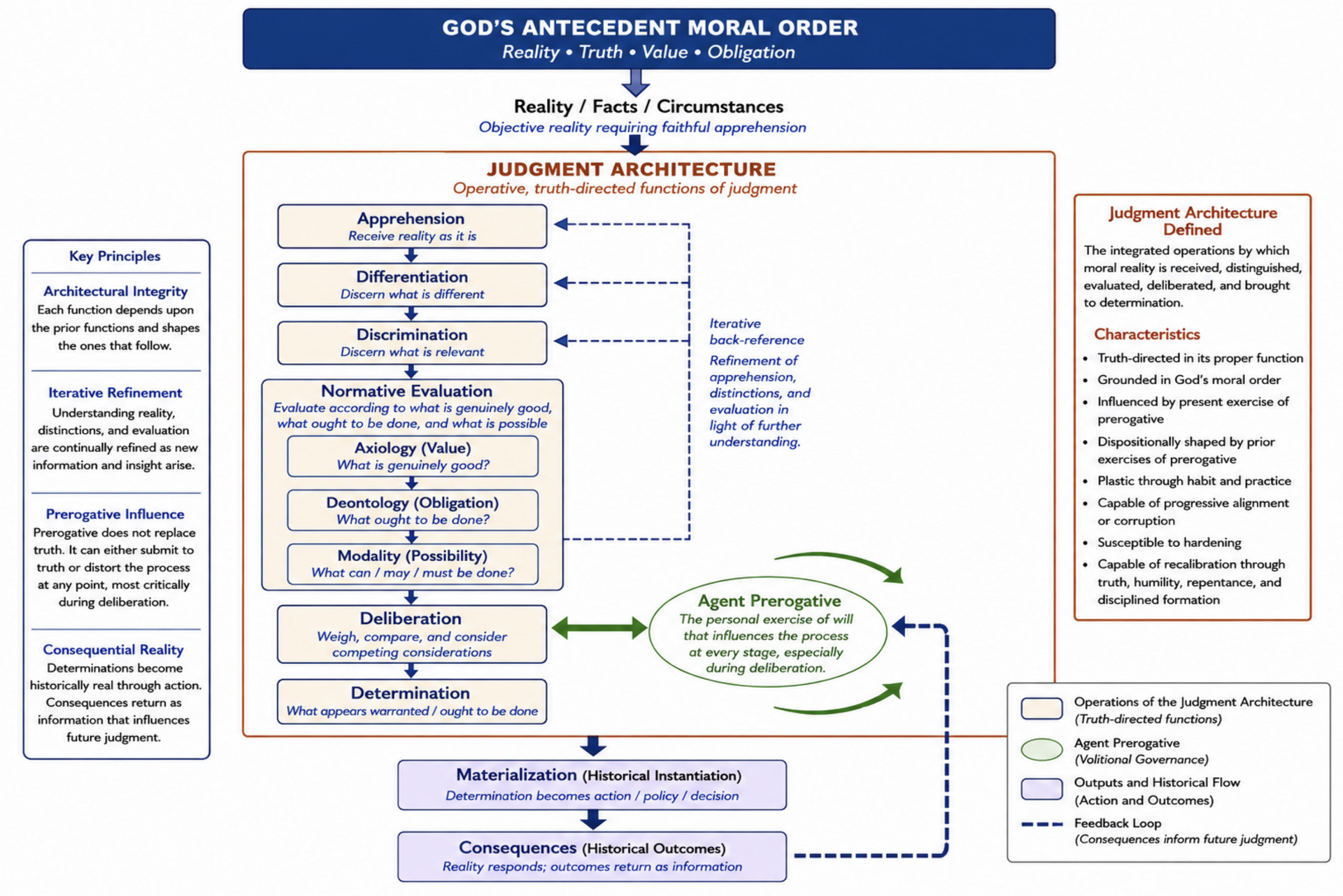
Figure 1 should be understood as an operational model rather than a temporal sequence.
Although the various functions are presented sequentially for clarity, judgment is recursive and interactive.
Apprehension, differentiation, evaluation, deliberation, and prerogative continually influence one another before a determination is finally materialised in history.
This architecture provides the framework within which the subsequent discussion of iniquity, plasticity, adjudicative constitution, and governance will proceed.
The present inquiry may be understood as an extended examination of the operative consequences of iniquity. The preceding study, The Axiological Root of Moral Failure, established that Scripture distinguishes three principal loci of moral failure—iniquity, transgression, and sin. Those distinctions remain controlling throughout the present essay and are neither redefined nor expanded here. The present inquiry addresses a different question. If iniquity truly constitutes the axiological root of moral failure, by what means does that inward distortion progressively reshape moral agency before it becomes visible in conduct, governance, and public moral order?
The answer proposed throughout this essay is that it does so through the judgment architecture. The prophets repeatedly diagnose societies through the quality of their judgments because judgment is the principal operative means by which axiological orientation becomes historically consequential. Long before rebellion becomes publicly visible, before conduct becomes habitual, and before institutions become corrupt, the personality has already begun to apprehend reality differently, preserve different distinctions, evaluate according to different priorities, and arrive at different determinations. Corrupted governance therefore begins long before corrupt policy. It begins with the gradual deformation of the adjudicative capability through which governance itself is exercised.
This observation explains why the prophetic literature repeatedly directs its attention toward judges, rulers, priests, counsellors, shepherds, and all those entrusted with discernment. The issue is never merely that these individuals eventually commit wrongful acts. Rather, the architecture through which they receive, evaluate, and administer moral reality has itself become progressively distorted. Their governance has become unsound because the personality through which governance is exercised has already undergone a deeper axiological corruption.
Accordingly, the present essay is not principally a doctrine of judgment. Nor is it simply another treatment of moral failure. It is an inquiry into the manner by which iniquity progressively reshapes the adjudicative capability of the moral personality until that distortion becomes publicly embodied in governance, institutions, and ultimately civilisation itself.
Within this wider judgment architecture, however, the normative order remains hierarchically structured. Axiology necessarily precedes deontology because obligation can arise only in relation to what is first recognised as good. Modality follows both because questions of possibility, permission, necessity, and execution presuppose both value and obligation. Although deliberation may revisit these domains repeatedly during the exercise of judgment, their ontological dependence never changes. The architecture may move recursively between them, but it cannot reverse their order of dependence.
Iniquity is a crooked moral orientation—a cultivated or acquired distortion of value whereby the personality progressively ceases to love what God loves and increasingly esteems what God rejects. This is the deepest level of moral corruption because it concerns neither isolated actions nor isolated decisions. It concerns the ordering of love itself.
What the personality values determines what it notices. What it notices influences what it distinguishes. What it distinguishes governs what it evaluates. What it evaluates determines what it judges. What it judges ultimately governs what it instantiates through governance.
For this reason, iniquity exerts continual pressure upon the judgment architecture. It inclines the personality toward selective apprehension, convenient distinctions, partial evaluation, resistance to correction, and progressively distorted determinations. The corruption therefore appears long before outward rebellion becomes fully visible. Judgment becomes the first public arena in which the deeper disorder of value reveals itself, exposing the progressive deterioration of the governor before the corruption of governance becomes unmistakable.
Transgression is the knowing and premeditated rejection of apprehended obligation. Whereas iniquity concerns what the personality has come to value, transgression concerns what the personality knowingly determines to violate. The relevant obligation has already been recognised. The moral boundary is understood. Nevertheless, the personality deliberately chooses to cross it.
Transgression therefore belongs principally to the deontic dimension of moral agency. It represents conscious rebellion against what judgment has already recognised as right. The failure lies not in the inability to distinguish moral obligation but in the deliberate refusal to submit to it.
Sin is an unpremeditated failure in moral execution within the concrete circumstances confronting the personality. The individual may neither reject the good nor deliberately intend rebellion, yet nevertheless fail through weakness, fear, appetite, distraction, habit, exhaustion, or insufficient moral formation.
The failure therefore lies neither primarily in valuation nor in deliberate rejection of obligation, but in execution. Sin belongs principally to the modal dimension of moral agency because it concerns the failure to instantiate what judgment has already recognised as right within the practical realities of the moment.
These three categories should never be understood as differing degrees of the same phenomenon. They identify three distinct loci of moral distortion operating at different levels within moral agency. Iniquity corrupts valuation. Transgression rebels against obligation. Sin falls short in execution.
Their corresponding restorations therefore differ.
Iniquity requires axiological realignment through the recovery of rightly ordered love according to God's own constitution.
Transgression requires repentant resubmission to rightful obligation.
Sin requires the progressive re-habituation of moral execution, whereby the will is strengthened through disciplined obedience until faithful action increasingly follows faithful judgment.
This distinction is indispensable to the present inquiry because the theology of governance neither replaces nor expands the established taxonomy of moral failure. Rather, it explains how that taxonomy becomes historically operative.
If iniquity is the axiological root of moral collapse, then the judgment architecture is the operative process through which that crooked orientation progressively reshapes the adjudicative capability of the personality. Governance subsequently becomes the historical materialisation of the determinations arising from that progressively formed—or progressively deformed—capacity.
The prophets therefore expose corrupted judgment, not because judgment itself is the deepest problem, but because it constitutes the earliest public manifestation of a prior axiological disorder. God repeatedly evaluates the governor before the governance because governance can never rise above the quality of the adjudicative capability through which it is exercised.
The relationship may therefore be summarised succinctly. Iniquity is the axiological root of moral failure. The judgment architecture is the operative process through which that distortion progressively reshapes the moral personality. Governance is the historical instantiation of the determinations thereby formed. In this way, an inward disorder of love ultimately becomes embodied in the public moral order, linking the present inquiry directly to the wider SubMetaphysics framework.
If the judgment architecture is the principal means through which iniquity becomes historically operative, an important distinction must immediately be preserved. Not every defective judgment is morally culpable. Scripture consistently distinguishes between moral corruption and honest limitation. Human beings are finite. They possess incomplete information, limited experience, imperfect memory, restricted perception, and varying degrees of maturity. Consequently, a mistaken judgment should never automatically be interpreted as evidence of moral rebellion. This distinction is essential if the present framework is to remain both biblically and morally coherent.
The first category is error. Error concerns falsity. A personality may sincerely apprehend the available evidence, preserve the relevant distinctions, seek the good, and nevertheless arrive at an incorrect conclusion because its knowledge is incomplete or because circumstances genuinely obscure the truth. Such error is neither identical with iniquity nor equivalent to sin. It reflects the ordinary epistemic limitations of finite creatures. Scripture itself repeatedly portrays faithful individuals whose judgments mature through progressive revelation, correction, and experience. Error therefore belongs primarily to the cognitive limitations of finite existence rather than to the corruption of moral agency.
More serious than simple error is disorder within the judgment architecture itself. Disorder arises when the operations of judgment fail to function harmoniously. Relevant distinctions may be overlooked, evidence may receive disproportionate weight, important considerations may be ignored, and the various operations of judgment may no longer remain properly integrated. Immaturity, emotional instability, poor formation, inherited assumptions, or insufficient discipline may all contribute to defective judgment without necessarily implying conscious rebellion. Disorder therefore concerns the operation of the architecture itself rather than the settled moral orientation of the personality. Many forms of disorder remain entirely corrigible. Indeed, much of education, discipleship, and wisdom consists precisely in the gradual ordering of judgment. Wisdom may therefore be understood as progressively disciplined judgment, and the prophetic call to repentance repeatedly includes an invitation to such recalibration.
A more serious possibility now emerges. The judgment architecture may become progressively corrupted through repeated exercises of misdirected prerogative. Unlike simple error or developmental immaturity, corruption is not merely something that happens to the personality; it becomes something the personality progressively chooses. Evidence is selectively admitted, correction becomes unwelcome, distinctions become inconvenient, truth becomes subordinate to desired outcomes, inquiry is prematurely terminated, and reasoning becomes increasingly self-protective. Reality itself is gradually reorganised around the interests of the self rather than around the moral order grounded in God. This is the practical operation of iniquity. The crooked orientation previously established now begins actively reshaping the judgment architecture through which every subsequent determination is formed. The prophets repeatedly expose precisely this condition. Their concern is not merely that Israel has reached incorrect conclusions, but that the processes by which those conclusions are reached have themselves become progressively distorted.
The distinctions may therefore be stated clearly. Error concerns truth: the conclusion reached is false despite an honest exercise of judgment. Disorder concerns architecture: the judgment process itself functions defectively, whether through immaturity, poor formation, or other corrigible limitations. Corruption concerns orientation: iniquity progressively bends the judgment architecture toward determinations increasingly inconsistent with God's moral order. These categories should never be collapsed. Only the third properly belongs to the present inquiry, for it explains how the settled orientation of the moral personality progressively reshapes the architecture of judgment itself. The first two, by contrast, explain how finite personalities may judge imperfectly without thereby becoming morally corrupt.
The prophetic concern with judgment would have little practical significance if judgment itself were fixed and incapable of development. Scripture assumes precisely the opposite. The judgment architecture is neither static nor morally neutral. It is profoundly plastic. Every exercise of judgment contributes, however subtly, to the future manner in which judgment itself will operate. This is one of the most significant implications of the present inquiry. Human beings do not merely make judgments; they progressively become certain kinds of judges. Each determination influences the next. Each exercise of prerogative leaves a residue, and each repeated preference gradually disciplines or distorts the architecture through which subsequent determinations will be reached. The moral personality therefore inhabits an adjudicative history of its own making.
When the personality repeatedly chooses to receive correction, examine evidence honestly, preserve difficult distinctions, and submit itself to what is true rather than merely convenient, the judgment architecture becomes progressively ordered. Humility becomes more natural, discernment more reliable, wisdom more immediate, and correct distinctions increasingly intuitive. This explains why mature righteousness often appears effortless. Such apparent effortlessness is not evidence that judgment has become automatic or unreflective. Rather, it reflects the cumulative effects of disciplined formation, through which faithful judgment has become increasingly habitual because the architecture itself has been progressively ordered by repeated alignment with God's antecedent moral reality.
The opposite process is equally real. Repeated self-interest, repeated rationalization, repeated suppression of inconvenient truth, and repeated preference for immediate advantage over enduring fidelity gradually reshape the judgment architecture itself. The personality no longer merely commits isolated errors; its entire manner of judging begins to change. Truth becomes progressively more difficult to recognise because the architecture through which truth is apprehended has itself become increasingly distorted. This is precisely what the earlier analysis identified as iniquity. The personality has become crooked in its valuation. The present inquiry explains how that crooked valuation progressively manifests itself within the operations of judgment, as the architecture itself becomes increasingly disposed toward the determinations demanded by its distorted loves.
An important clarification follows from this analysis. Rapid judgment is neither virtuous nor corrupt in itself. A mature judge may arrive quickly at correct determinations because prolonged formation has disciplined the judgment architecture. Conversely, a hardened personality may also judge quickly because alternative possibilities are no longer genuinely entertained. Both arrive rapidly, but one through wisdom and the other through rigidity. The relevant question is therefore never the speed with which a determination is reached, but the formation that produced it. The decisive issue is not how quickly a personality judges, but what kind of judgment architecture repeated exercises of judgment and prerogative have progressively formed.
The governing proposition is therefore straightforward. Judgment is plastic because repeated exercises of prerogative progressively shape the architecture through which future judgments are formed. Accordingly, the deepest moral question is often not simply, What decision was made? It is, What kind of judge is this personality becoming?
The preceding discussion established that judgment is neither static nor morally neutral. Repeated exercises of judgment, prerogative, and materialized action progressively shape the moral personality through whom future judgments are rendered. The present inquiry now requires a further distinction.
Every exercise of judgment presupposes a present constitutional capability through which it proceeds. At the same time, that present capability is itself the product of a longer history of formation. Accordingly, two related, yet analytically distinct, concepts must be distinguished.
The first concerns the governor's present constitutional organisation for judgment.
The second concerns the enduring historical trajectory through which that constitutional organisation has progressively developed.
The first may be termed the adjudicative constitution.
The second, the adjudicative habitus.
Together they explain how Scripture can simultaneously evaluate a governor's present capability while also portraying the lifelong formation—or deformation—of that capability through repeated participation in God's moral order.
Every exercise of judgment proceeds through the governor's present adjudicative constitution. The adjudicative constitution is the governor's instantaneous and monochronic constitutional configuration through which judgment is exercised. It describes how the moral personality is presently organised to participate in governance.
Underlying every adjudicative constitution is adjudicative capability: the governor's present capacity faithfully to apprehend and comprehend reality. Before moral reality can be distinguished, evaluated, or brought to determination, it must first be recognised. Capability therefore concerns recognition. It answers the prior question: What is this governor presently capable of faithfully apprehending and understanding? A governor cannot faithfully administer a moral order that he is incapable of rightly perceiving.
The adjudicative constitution concerns something different. It is the present organisation of that capability into judgment. Through the constitution, apprehended reality is distinguished, normatively evaluated according to God's antecedent moral order, considered in light of obligation and circumstance, subjected to prerogative, and ultimately brought to determination. The constitution therefore answers a different question: How is this governor presently organised to exercise judgment?
The adjudicative constitution is fundamentally instantaneous and monochronic. It represents the governor's present constitutional configuration rather than the historical process through which that configuration has arisen. Every exercise of judgment proceeds through the constitution presently possessed by the moral personality. Whatever capabilities, disciplines, virtues, weaknesses, habits, or distortions have previously been acquired become immediately operative through this present constitutional organisation. Because that organisation has itself been progressively formed through the adjudicative habitus, its operation ordinarily requires little conscious reconstruction. Judgment increasingly proceeds in a pre-reflective, or reflexive, manner, without thereby ceasing to remain genuinely responsive to truth, correction, or further deliberation when circumstances require.
Although the adjudicative constitution remains continually capable of recalibration through truth, correction, repentance, discipline, providential experience, and divine grace, it nevertheless represents the governor's present constitutional organisation for judgment. Scripture therefore consistently evaluates governors according to this present constitutional capability. Whether kings, judges, priests, shepherds, parents, or private individuals, each is assessed according to the constitutional organisation through which judgment is presently exercised.
The adjudicative habitus concerns something fundamentally different. I
Rather than describing the governor's present constitutional configuration, it describes the enduring historical trajectory through which successive adjudicative constitutions are progressively formed. The habitus is therefore fundamentally dynamic and diachronic. It is the accumulated momentum produced through repeated exercises of judgment, prerogative, obedience, correction, suffering, discipline, experience, and divine providence.
Every completed cycle of judgment leaves behind more than an isolated determination. It contributes, however subtly, to the continuing formation of the moral governor. Repeated submission to truth strengthens the habitus toward faithful governance. Repeated resistance to truth strengthens it toward corruption. Wisdom and hardening therefore emerge not as isolated events but as progressively acquired trajectories.
As the adjudicative habitus develops, what initially required careful, reflective deliberation progressively requires less conscious reconstruction and becomes increasingly pre-reflective, or reflexive. Faithful participation in God's antecedent moral order gradually disciplines the moral personality so that truthful apprehension, faithful distinction, sound evaluation, and righteous determination become increasingly habitual rather than laboriously reconstructed on every occasion. Conversely, repeated resistance to truth progressively renders distorted judgment equally reflexive, so that corruption itself becomes increasingly habituated. The habitus therefore describes not merely accumulated experience, but the progressive formation of increasingly reflexive patterns of judgment.
This explains why Scripture so consistently portrays formation before office. Moses in Midian, Joseph in Egypt, David in the wilderness, Daniel in Babylon, the apostles under Christ's instruction, and even Christ's human development all illustrate the same governing principle. Before governance is entrusted, governors are formed. Before enduring constitutional capability comes the long historical formation of the adjudicative habitus.
The habitus therefore possesses both momentum and trajectory. It inclines future constitutional formation without rendering it irreversible. Because human moral agency remains genuinely responsive to truth, the habitus, though cumulative, remains corrigible. Repentance, discipline, providential experience, and divine grace may gradually redirect its trajectory, producing increasingly faithful adjudicative constitutions through time.
The relationship between these concepts may now be stated succinctly.
The adjudicative capability describes what the governor is presently capable of faithfully recognising.
The adjudicative constitution describes the governor's instantaneous monochronic constitutional organisation through which that capability is exercised in judgment.
The adjudicative habitus describes the dynamic diachronic trajectory through which successive adjudicative constitutions are progressively formed.
The constitution therefore answers the question:
How is this governor presently organised to judge?
The habitus answers a different question:
What kind of governor is this personality progressively becoming?
Every exercise of judgment therefore possesses both a monochronic and a diachronic significance. Monochronically, it proceeds through the governor's present adjudicative constitution. Diachronically, it contributes to the continuing formation of the adjudicative habitus from which future adjudicative constitutions will arise.
This distinction explains why Scripture repeatedly concerns itself not merely with isolated judgments, but with the formation of those entrusted with judgment. God's concern extends beyond today's determination to the enduring constitutional capability through which future determinations will be rendered.
Every exercise of judgment therefore possesses both a monochronic and a diachronic significance. Monochronically, judgment proceeds through the governor's present adjudicative constitution. Diachronically, every exercise contributes, however subtly, to the continuing formation of the adjudicative habitus from which future adjudicative constitutions will arise.
The present inquiry is therefore principally diachronic. While individual judgments remain important, the deeper concern is the progressive formation of moral governors. Scripture consistently asks not merely whether a particular judgment is correct, but what kind of governor repeated judgments are progressively producing.
Judgment rarely terminates with the individual. Wherever authority is entrusted to a moral personality, judgments acquire a public life extending far beyond the moment in which they are made. A parent's determination shapes the life of a family. An elder's determination shapes a congregation. A board's determination shapes an organisation. A judge's determination shapes the law. A ruler's determination shapes a nation. In every case, the significance of a judgment lies not merely in resolving an immediate question but in establishing patterns that progressively extend beyond the original act itself.
Once embodied in action, determinations acquire a life of their own. Decisions become precedents. Precedents generate expectations. Expectations gradually become norms. Norms shape culture. Culture eventually stabilises into enduring institutional structures. The progression may therefore be expressed succinctly:
Determination → Decision → Precedent → Expectation → Norm → Culture → Structure
This progression explains why Scripture gives such sustained attention to the quality of judgment exercised by those entrusted with authority. An isolated unjust decision may subsequently be corrected. Repeated unjust decisions, however, gradually become institutional habits. Eventually, the institution no longer merely contains injustice; it begins to reproduce it.
This development should not be misunderstood. Institutions are real and possess genuine causal influence. Established procedures shape future decisions, institutional memory preserves precedents long after their original authors have disappeared, and organisational roles, incentives, sanctions, reporting structures, and expectations all influence subsequent exercises of moral agency. In this sense, institutions possess what may properly be described as dependent emergent causal power. They become more than the sum of the intentions presently held by their individual members, preserving patterns of conduct across generations and shaping the personalities who subsequently inherit them.
Yet institutions never become independent moral personalities. An institution possesses no conscience of its own. It cannot repent, believe, exercise prerogative, or undergo moral formation apart from the persons who continually authorise, administer, preserve, resist, reform, or dismantle its operations. Scripture consistently maintains this distinction. Israel may stand beneath corporate judgment while individual responsibility remains intact. Cities may become corrupt, yet rulers, priests, prophets, merchants, and citizens continue to bear moral responsibility according to their knowledge, authority, participation, freedom, and opportunity to act otherwise.
Corporate structures therefore possess genuine causal power without acquiring independent moral agency. This distinction preserves two complementary truths. First, institutions genuinely shape those who inhabit them. Second, moral responsibility remains located within the personalities whose adjudicative constitutions continually create, maintain, perpetuate, resist, or reform those structures. The prophets consistently hold both realities together. Corporate corruption is never reduced to isolated personal failures, yet neither is personal responsibility dissolved into impersonal systems. Corporate order is, rather, the accumulated historical embodiment of countless prior determinations issuing from the adjudicative constitutions of successive generations.
Corporate structures possess dependent emergent causal power. Moral personality remains located within the persons who continually constitute, administer, preserve, reform, or resist those structures. Institutional reform therefore cannot consist merely in altering policies or procedures. Lasting reform ultimately requires the reformation of the adjudicative constitutions from which those policies continually arise.
One of the most significant implications of the preceding analysis is that the same governing relations recur across remarkably different spheres of life. The individual governs himself. Parents govern households. Elders govern churches. Boards govern organisations. Commanders govern military units. Judges govern courts. Kings and magistrates govern nations. Although the outward forms differ enormously, the underlying architectonic relations remain recognisably the same.
At every scale there exist one or more moral personalities, an objective reality requiring faithful apprehension, an antecedent moral order grounded in God, the exercise of the judgment architecture through an adjudicative constitution, the continual operation of prerogative, a consequential determination, historical instantiation in conduct or policy, and feedback through which the adjudicative constitution itself is progressively formed. This recurrence should not be understood mathematically. The claim is neither that families and nations are identical nor that organisations merely enlarge the psychology of the individual. Rather, wherever responsible moral agency is exercised, the same governing relations remain structurally analogous despite enormous differences in scale, authority, and responsibility.
The authority entrusted to the governor changes. The responsibilities change. The modal possibilities change. The historical consequences likewise change. Yet the architectonic relations through which moral reality is apprehended, distinguished, evaluated, determined, and embodied remain remarkably stable. Whether a father disciplines a child, an elder resolves a doctrinal dispute, a surgeon determines an appropriate course of treatment, a corporate board establishes organisational policy, a judge interprets the law, or a king administers justice, the same fundamental operations remain recognisable. Reality must be faithfully apprehended. Relevant distinctions must be preserved. Value must be rightly evaluated. Obligation must be recognised. Contextual possibilities must be assessed. Determinations must be reached. Prerogative must govern their enactment. Responsibility must finally be borne for whatever becomes historically actual.
This functional self-similarity explains why Scripture moves so naturally between apparently unrelated spheres of governance while applying the same underlying moral principles. The same God who requires faithful self-government also requires faithful household government, faithful ecclesiastical government, faithful institutional government, and faithful national government. The same concern for truthful judgment appears within the home, the sanctuary, the marketplace, the courtroom, and the throne room because each constitutes a delegated participation in God's own antecedent moral government.
Governance is therefore profoundly context-sensitive without becoming structurally discontinuous. The facts differ. The responsibilities differ. The authorities differ. The relationships differ. The consequences differ. Yet the governing relations remain recognisably constant because every sphere of delegated authority ultimately depends upon the same antecedent moral order and the same architectonic operations by which moral personalities participate in its historical instantiation.
Governance is functionally self-similar across every scale of delegated authority. Although offices, responsibilities, relationships, modal possibilities, and consequences vary enormously, the underlying architectonic relations by which moral personalities faithfully participate in God's antecedent moral order remain structurally analogous. This is not a mathematical claim concerning fractal geometry, but an analogical claim concerning the recurring structure of governance wherever responsible moral agency is exercised.
If governance is functionally self-similar across every scale of moral agency, another conclusion follows naturally. Integrity cannot consist merely in repeating identical actions under every circumstance. The same action may be righteous in one context and irresponsible in another. Scripture repeatedly recognises this distinction. Parents possess authority that children do not. Judges exercise responsibilities unavailable to private citizens. Kings bear obligations different from priests, and physicians discharge duties distinct from pastors. Circumstances change. Offices change. Modal possibilities change. Yet the antecedent moral order does not.
Faithful governance therefore cannot be reduced to mechanical consistency of behaviour. Rather, integrity concerns the preservation of the adjudicative constitution through changing circumstances. The moral personality remains constitutionally capable of faithfully apprehending reality, preserving relevant distinctions, evaluating what is genuinely good, recognising obligation, exercising sound prerogative, and arriving at truthful determinations even while the concrete application of those determinations legitimately varies according to office, authority, responsibility, and circumstance.
This follows directly from the earlier discussion of modality. Context determines what may, must, or ought to be done within a particular situation, but it never determines what is good. Consequently, although determinations may legitimately differ from one circumstance to another, the adjudicative constitution through which those determinations arise must remain capable of faithfully participating in God's antecedent moral order.
Integrity should therefore be understood as the preservation of adjudicative capability despite changing pressures, relationships, incentives, interests, opportunities, and responsibilities. A personality possessing integrity does not merely reach correct conclusions on isolated occasions. Rather, it remains capable of governing faithfully regardless of who benefits, regardless of personal advantage, regardless of external pressure, and regardless of changing circumstances. Integrity therefore belongs not primarily to behaviour but to constitutional soundness. The decisive question is never simply whether a particular decision appears correct, but whether the adjudicative constitution producing that decision has remained sufficiently ordered to continue governing faithfully under every competing influence.
This also explains Scripture's repeated condemnation of partiality. Partiality is more than an isolated injustice. It reveals that the adjudicative constitution has begun to surrender governance to preference, self-interest, or expediency rather than truth. The concern is therefore not simply that one unjust decision has occurred. It is that the governor himself is becoming progressively incapable of faithfully governing.
Integrity may therefore be defined as:
The preservation of adjudicative capability through changing relationships, authorities, responsibilities, pressures, and circumstances, such that faithful participation in God's antecedent moral order remains continuously possible.
A principle that governs only when convenient has already ceased to govern the personality. Preference has assumed its place.
Throughout this inquiry, judgment has been treated as an operation of the moral personality. Yet while the judging subject is metaphysical, the exercise of judgment during earthly existence is necessarily embodied. The adjudicative constitution therefore operates through embodied faculties, including perception, attention, memory, cognition, emotion, and the physiological condition of the body. Although moral responsibility remains located within the personality itself, the embodied faculties through which judgment is exercised may be strengthened, weakened, clarified, disciplined, distracted, or impaired.
Scripture repeatedly acknowledges this reality. Priests were forbidden to minister under the influence of intoxicating drink so that they might faithfully distinguish between the holy and the profane and instruct Israel accordingly. Kings were warned against drunkenness lest they forget the law and pervert judgment. Wisdom literature repeatedly associates sobriety, vigilance, disciplined appetites, and self-control with sound judgment, while the New Testament continually exhorts believers to remain sober-minded, watchful, and self-controlled.
These commands are not merely instructions concerning personal morality. They are fundamentally governmental. They concern the preservation of the embodied capacities through which faithful governance is exercised. Scripture consistently recognises that disordered appetite, intoxication, exhaustion, uncontrolled passion, prejudice, distraction, fear, and every comparable impairment threaten the constitutional capability by which moral personalities faithfully participate in God's moral order. The governing concern is therefore not bodily health as an end in itself but the preservation of those embodied faculties through which truthful judgment remains possible.
The supreme biblical example appears in Christ Himself. Throughout His trial and crucifixion He endured profound physical suffering, emotional anguish, injustice, abandonment, humiliation, and exhaustion. Yet none of these pressures succeeded in corrupting His adjudicative constitution. He continued faithfully to distinguish truth from falsehood, righteousness from expediency, obedience from self-preservation, and the Father's will from every competing alternative. His circumstances changed dramatically. His constitutional capacity to govern faithfully did not.
Within the Adventist understanding, Christ's refusal of the stupefying mixture offered before His crucifixion illustrates this principle with particular force. Rather than diminishing the very faculties through which perfect obedience was to be exercised, He deliberately preserved the clarity of consciousness required for faithful participation in His Father's will. Whether or not this particular interpretation is adopted, the Passion narratives consistently portray the preservation of adjudicative capability under maximal contextual pressure.
The contrast with Herod Antipas is instructive. Herod recognised John the Baptist as a righteous and holy man, listened to him gladly, and initially resisted executing him. Yet under the combined pressures of public expectation, wounded pride, emotional excitement, a rash oath, and likely intoxication, he progressively surrendered the constitutional capability by which he had originally judged rightly. His judgment did not collapse instantaneously. Rather, his capacity for faithful governance gradually yielded to expediency.
Christ presents the opposite pattern. Although subjected to incomparably greater physical, emotional, and spiritual pressures, neither His judgment nor His prerogative became subordinate to circumstance. The constitutional capability through which He governed remained fully preserved.
The broader principle now becomes clear. Faithful governance is measured not merely by the correctness of isolated determinations but by the preservation of the constitutional capability from which faithful determinations continually arise. Context may alter what is possible, difficult, costly, or immediately advantageous, but it must never be permitted to deform the adjudicative constitution by which truth, goodness, and obligation continue to be recognised. The preservation of embodied judgment therefore becomes one of the most fundamental acts of self-government because it safeguards the very capability through which the moral personality faithfully participates in God's antecedent moral order.
Judgment belongs to the metaphysical personality, yet during temporal existence it is exercised through embodied faculties. The preservation of those faculties is therefore an indispensable act of governance because it preserves the adjudicative capability through which faithful participation in God's antecedent moral order remains possible.
The prophetic emphasis upon judgment does not conclude with the Old Testament. Rather, the New Testament assumes the same governing architecture and carries it to its fullest expression in Christ and His Church. Far from diminishing the place of judgment, Christ restores it to its proper theological significance.
When rebuking the religious leaders, He condemns them for neglecting "the weightier matters of the law, judgment, mercy, and faith." Significantly, judgment appears alongside mercy rather than in opposition to it. Mercy does not replace judgment; rather, faithful judgment rightly orders the exercise of mercy. Likewise, Christ commands, "Judge not according to the appearance, but judge righteous judgment." The prohibition concerns hypocritical and superficial judgment, not judgment itself. Indeed, the command presupposes that righteous judgment remains both possible and necessary for those who would faithfully participate in God's government.
The life of the early Church exhibits precisely the same pattern. Acts 15 records far more than an ecclesiastical decision. It presents an extended exercise of governance in which evidence is received, testimony examined, Scripture considered, relevant distinctions preserved, competing considerations deliberated, and a corporate determination finally reached. The apostles do not govern through arbitrary authority but through disciplined participation in the antecedent moral order revealed by God.
Paul assumes the same responsibility throughout his epistles. Churches are expected to exercise judgment concerning doctrine, discipline, leadership, disputes, restoration, and communal order. The recurring concern is never simply that decisions be reached, but that those entrusted with governance possess the adjudicative capability necessary to reach them faithfully.
The New Testament also continues the broader biblical pattern of formation before commission. Christ does not merely instruct the apostles what decisions to make. He spends years forming the very personalities through whom future governance will be exercised. As throughout the Old Testament, God's concern extends beyond isolated determinations to the constitutional formation of those who will bear delegated authority within His Kingdom.
Finally, Revelation returns the entire biblical narrative to its ultimate consummation. Every church, every ruler, every nation, every institution, every exercise of delegated governance, and every competing moral order ultimately stand beneath the judgment of Christ. The final judgment therefore represents more than the conclusion of history. It is the final vindication of God's own antecedent governance over every derivative exercise of authority throughout creation.
The New Testament preserves the prophetic emphasis upon judgment while revealing its perfect expression in Christ and extending the formation of faithful governors throughout the life of His Church.
A natural objection may now be raised. Has this essay merely described sin under another name?
The answer is no, because the distinction is fundamental.
The earlier Submetaphysics analysis established that iniquity, transgression, and sin identify distinct loci of moral failure. The present inquiry neither replaces nor expands those categories. Rather, it investigates the upstream adjudicative architecture through which those failures progressively become historically operative.
Accordingly, the governing questions differ. A doctrine of moral failure asks what kind of failure has occurred. Was this iniquity? Was this transgression? Was this sin?
The present inquiry asks a different set of questions. How was reality apprehended? Which distinctions were preserved, and which collapsed? How was value evaluated? Which obligations were recognised? Which possibilities were considered? How did prerogative influence the process? What adjudicative constitution was being formed? What kind of governor was this personality becoming? What pattern of governance was being progressively instantiated?
These questions concern not merely the classification of behaviour but the constitutional formation of moral agency itself.
This distinction also explains the prophetic emphasis observed throughout the essay. Had Scripture been concerned only with cataloguing wrongdoing, the ordinary vocabulary of moral failure would have sufficed. Instead, the prophets repeatedly expose failures of counsel, discernment, distinction, evaluation, deliberation, and judgment. Their concern consistently precedes behaviour. They examine the integrity of the governing capacities through which behaviour eventually becomes socially embodied.
The theology of governance therefore does not compete with a theology of moral failure. It presupposes and complements it. The doctrine of moral failure identifies the character of the breach. The theology of governance investigates the constitutional conditions through which such breaches are either resisted or progressively cultivated. It therefore explains not merely what persons, institutions, or nations become, but how successive generations of governors progressively acquire the constitutional capability—or incapability—to participate faithfully in God's antecedent moral order.
Iniquity, transgression, and sin identify the principal loci of moral failure. The theology of governance investigates the adjudicative constitution through which those possibilities progressively become historically embodied within persons, institutions, and nations.
The answer proposed throughout this essay has progressively emerged. God repeatedly returns to judgment because judgment occupies the critical point at which His antecedent moral order becomes historically instantiated through the agency of created personalities.
Within the judgment architecture, reality becomes apprehension. Difference becomes distinction. Truth becomes evaluation. Value becomes priority. Obligation becomes determination. Prerogative becomes either faithful participation or deliberate resistance. Determination becomes action. Action becomes precedent. Precedent becomes institutional memory. Institutional memory becomes culture. Culture becomes enduring moral order. That moral order subsequently becomes one of the formative environments within which future adjudicative constitutions are themselves progressively engineered.
Judgment therefore occupies the pivotal position between God's immutable moral order and its historical manifestation within creation. It neither creates moral reality nor merely observes it. Rather, it constitutes the principal architectonic process through which created personalities participate in, distort, or resist the governance that properly belongs to God alone.
For this reason, judgments are never merely isolated decisions. They reveal the present condition of the adjudicative constitution from which they arise while simultaneously contributing to its further formation. Through repetition they become embodied within institutions, traditions, and cultures that subsequently participate in the formation of future governors.
This explains why the prophets repeatedly diagnose societies through their judgments. Judgments reveal how a people has learned to apprehend reality, which distinctions it continues to preserve, what goods it has learned to value, which obligations it continues to recognise, and what kind of governance it has become constitutionally capable of exercising. By the time corruption becomes publicly visible within institutions, the adjudicative constitutions through which those institutions are governed have often been deteriorating for generations. Conversely, enduring renewal begins not merely when outward conduct improves, but when the constitutional capability for faithful governance is itself restored.
The converse is equally revealing. Scripture not only diagnoses moral orders through their judgments, but at times portrays God Himself judging nations by acting upon the constitutional capability through which judgment is exercised. In the Isaianic oracles against the nations, the Lord repeatedly frustrates counsel, confounds the wise, and renders rulers incapable of faithful deliberation before political, economic, or military collapse becomes fully manifest (e.g. Isa. 19:3, 11–15). The governors remain in office, yet the constitutional capability by which they govern progressively deteriorates. The subsequent collapse of institutions therefore appears not merely as an external judgment, but as the historical consequence of an antecedent adjudicative collapse. The manner in which divine judgment is repeatedly portrayed confirms the pivotal and architectonic significance accorded to judgment within the governance- from that of nations to individuals. The same architectonic emphasis appears within the historical narratives. When David learned that Ahithophel had joined Absalom, he prayed not first for military success but that the Lord would "turn the counsel of Ahithophel into foolishness" (2 Sam. 15:31). The subsequent narrative culminates in the observation that "the LORD had appointed to defeat the good counsel of Ahithophel" (2 Sam. 17:14). Whether by frustrating counsel, confounding discernment, or restoring wisdom, Scripture repeatedly portrays divine governance operating at the level of judgment rather than treating judgment as merely one consequence among many.
A remarkable symmetry therefore emerges. God ordinarily builds and dismantles moral orders through the same architectonic mechanism: the formation—or dissolution—of adjudicative constitutions. Restoration proceeds through the formation of governors increasingly capable of faithful judgment. Judgment proceeds through the progressive dissolution of that constitutional capability. In both cases, the immediate object of divine activity is not merely institutions, but the governors through whom those institutions are administered. Had Scripture consistently foregrounded military power, economic prosperity, ritual continuity, or political institutions while assigning no comparable prominence to judgment, counsel, discernment, and governors, the present proposal would possess considerably less explanatory force.
The consistency of this biblical pattern is striking. Isaiah promises restored judges before restored righteousness. Jeremiah identifies righteous judgment with the knowledge of God. Ezekiel demands the recovery of faithful distinction. Daniel places every earthly ruler beneath the judgment of the Most High. Christ commands righteous judgment and spends His earthly ministry forming those who will subsequently govern His Church. Revelation finally vindicates God's own governance over every competing moral order.
The pattern is therefore neither incidental nor merely thematic. It is architectonic. Scripture repeatedly returns to judgment because judgment discloses the constitutional condition of the governor before that condition becomes fully embodied in governance. God's concern is never merely with isolated decisions, but with the constitutional formation—or constitutional dissolution—of those through whom His delegated governance will either be faithfully instantiated or progressively corrupted throughout history.
Simply put: God builds moral orders...through the formation of adjudicative constitutions; God dismantles moral orders....through the dissolution of adjudicative constitutions. The mechanism is the same. Only its direction differs.
God repeatedly diagnoses enduring moral orders through their judgments because judgments disclose the constitutional capability of those entrusted with governance. They reveal how reality has been apprehended, distinctions preserved, values rightly ordered, obligations recognised, and determinations faithfully reached.
Professions of faith may remain orthodox.
Religious forms may continue unchanged.
Institutions may retain their stated values.
Yet the judgments they habitually render disclose the quality of the governors they have become—and therefore the moral order that truly governs them.
The present inquiry permits a provisional definition of governance.
Governance is the functionally self-similar process through which moral personalities, individually and through coordinated corporate forms, participate in God's antecedent moral order by apprehending reality, preserving relevant distinctions, evaluating what is genuinely good, recognising obligation, assessing modal possibility, exercising prerogative, and determining what shall become historically instantiated.
The present investigation also permits several provisional conclusions concerning the judgment architecture.
It is:
The established biblical taxonomy of moral failure remains unchanged.
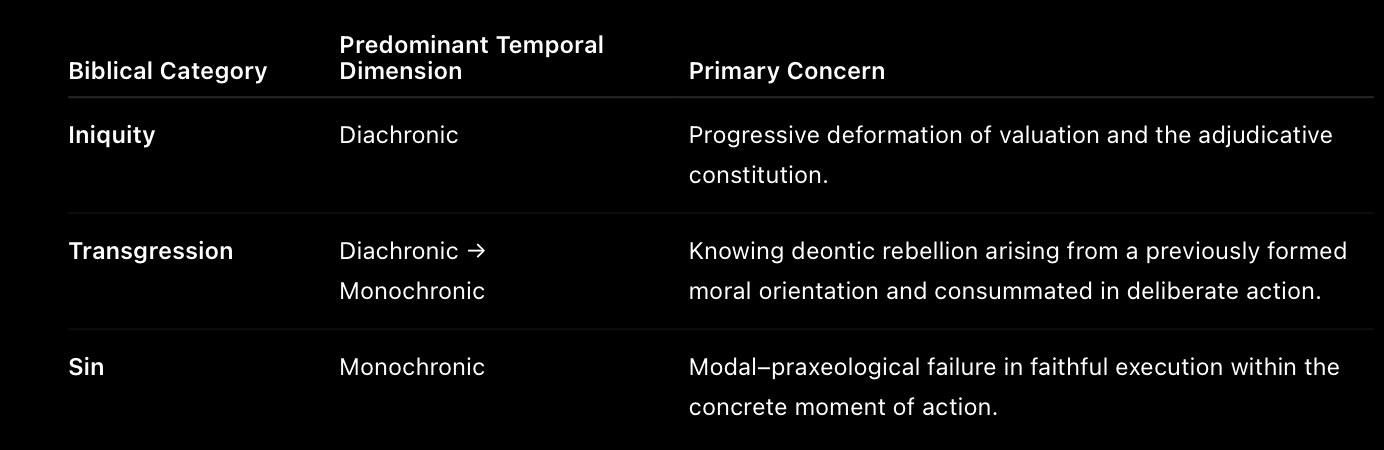
Table 1 Temporal emphasis within the established biblical taxonomy.
The table does not introduce new categories of moral failure, but indicates the predominant temporal horizon through which each category ordinarily becomes manifest.
The present essay has not sought to revise these categories but to explain the constitutional process through which they become historically operative.
Every enduring moral order—from the indivisible moral personality to the largest corporate institution—is progressively formed through the adjudicative constitutions by which successive personalities determine what shall become historically real. Institutions therefore become repositories of accumulated judgments, while simultaneously becoming formative environments within which future adjudicative constitutions are themselves progressively shaped.
This may explain why Scripture repeatedly returns to judgment. Before a person, a family, an institution, or a nation becomes settled in what it does, it becomes progressively constituted in how it habitually apprehends reality, preserves distinctions, evaluates value, recognises obligation, exercises prerogative, and determines what ought to become real.
The deepest diagnostic question is therefore no longer merely,
What have you done?
Nor even,
How have you judged?
It becomes,
What kind of governor have you become?
Or, more fundamentally,
How have you learned to see?
The present capacity of a moral personality to recognise reality faithfully through apprehension and comprehension. Adjudicative capability concerns the governor's ability to receive, understand, integrate, and preserve the factual and moral realities that must subsequently be brought to judgment.
Capability concerns recognition before determination. It answers the question:
What is this governor presently capable of perceiving and understanding?
Relationship to other terms: Adjudicative capability is exercised through the adjudicative constitution, progressively developed through the adjudicative habitus, and employed by the judgment architecture.
The present organisation of the moral personality through which adjudicative capability is exercised and judgment is formed. It integrates recognition, distinction, normative evaluation, prerogative, deliberation, and determination into the governor's present exercise of moral governance.
The adjudicative constitution is fundamentally monochronic, describing the governor's present constitutional state rather than the historical process by which that state has arisen.
It answers the question:
How is this governor presently organised to judge?
Relationship to other terms: The adjudicative constitution expresses the governor's present adjudicative capability, operates through the judgment architecture, and is progressively shaped through the adjudicative habitus.
The enduring historical trajectory through which successive adjudicative constitutions are progressively formed. The adjudicative habitus describes the accumulated momentum produced through repeated exercises of judgment, prerogative, obedience, correction, discipline, suffering, experience, providence, and habituation.
Unlike the adjudicative constitution, the habitus is fundamentally diachronic. It concerns not the governor's present constitutional state but the continuing direction in which that state is progressively developing.
It answers the question:
What kind of governor is this personality progressively becoming?
Because human moral agency remains responsive to truth, the adjudicative habitus remains corrigible through repentance, discipline, providential formation, and divine grace.
The consequential ordering of moral agency through responsible determination concerning what shall become historically real within a sphere of delegated authority grounded in God's antecedent moral order.
Governance extends beyond political institutions to include every sphere in which moral personalities exercise delegated responsibility, including self-government, the family, the church, professional life, organisations, and the state.
The warranted determination produced through the operation of the judgment architecture.
Strictly speaking, judgment denotes the determination itself rather than the wider process through which that determination is reached.
The truth-directed operative architecture through which reality is apprehended, comprehended, distinguished, normatively evaluated, deliberated upon, subjected to prerogative, and finally brought to determination.
It is the principal means through which moral personalities participate in God's antecedent moral order and exercise delegated governance.
It answers the question:
How is judgment actually exercised?
Pertaining to the present constitutional state or to a particular exercise of judgment considered at a specific moment.
The monochronic perspective asks:
What ought to be done now?
Pertaining to the progressive historical formation of the moral governor through repeated exercises of judgment and prerogative over time.
The diachronic perspective asks:
What kind of governor is this personality becoming?
The exercise of volitional authority by which the moral personality receives, resists, preserves, distorts, suspends, reopens, ratifies, or overrides the operations of judgment.
Prerogative governs the personality's relationship to truth throughout the judgment architecture and thereby contributes directly to the progressive formation of the adjudicative habitus.
The four principal adjudicative concepts employed throughout this essay describe distinct, though closely related, aspects of moral governance and should not be conflated.
Their relationship may be summarised as follows:
Adjudicative capability enables recognition; the adjudicative constitution organises that capability into the present exercise of judgment; the judgment architecture describes the operative process by which judgments are formed; and repeated participation in that process progressively shapes the adjudicative habitus, which in turn influences the formation of future adjudicative constitutions.